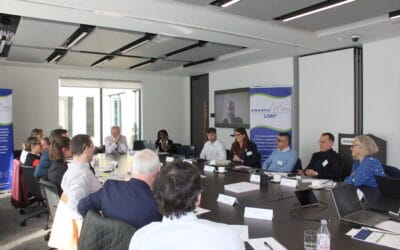
Earlier this week, UMP was in Bristol to host a roundtable with local councillors, officials, and other key stakeholders to discuss the transport priorities, opportunities, and challenges facing the West of England and surrounding areas.
By some measures, Bristol’s city centre effectively doubles in size during the day, with large numbers of people travelling in from the wider region for work, education, shopping, leisure, and more. This daily influx creates significant congestion for the city and its residents – an issue that improved multimodal connectivity can help to alleviate.
UMP member Dott is already active in the area, providing e-scooter and e-bike hire for local users. As Iqbal Ahmed noted during the discussion, more than half of their users globally combine their ride with another transport mode. This highlights the importance of reliable and frequent bus and rail services for their customer base, and it suggests that micromobility is acting as an enabler of public transport, rather than competing with it.
Another topic that featured prominently – one that is increasingly raised at UMP events – is how multiple jurisdictions can work together to build more integrated transport systems. The Government is pushing strongly for further devolution, particularly in transport, which is widely seen as a positive step toward enabling local areas to shape their own futures.
However, as we all know, transport journeys, major infrastructure, housing developments, and people’s lives do not stop at municipal boundaries. As local authorities receive greater powers, it will be essential that they also collaborate effectively with their neighbours.

UMP report reveals £5.3 billion unspent Section 106 funds across councils in England & Wales
The Urban Mobility Partnership has today launched its latest report Unlocking Section 106 Funding for Transport: How...